How to Choose the Right Brush Cutting Method for Wooded Lots in Moodus, CT
Choosing the wrong brush cutting method on a Moodus lot does not just leave the job half-done — aggressive invasives like Oriental bittersweet will resprout from root crowns and return denser than before. East Haddam properties sit in the Connecticut River Valley, where glacial rock, rolling slopes, and low wet margins often appear on the same lot. That combination of terrain and growth type makes equipment selection the single most important decision before any clearing work begins.
This guide walks you through the key variables: equipment types, invasive-specific cutting strategy, terrain factors, and seasonal timing — so you can evaluate providers on more than price. You can also review the brush cutting and clearing service page for a general overview of what is offered.
Why Do Moodus Lots Require a Different Approach?
Rocky glacial soils, uneven grades, and dense invasive overgrowth make standard residential equipment inadequate for most wooded lots in East Haddam and Moodus.
A flat suburban lot can be handled with basic walk-behind brush cutters or a residential-grade tractor. Moodus lots are rarely flat. Glacially deposited ledge rock sits just below the surface in many areas, drainage swales cut through upland brush zones, and the same half-acre may include a rocky slope, a soft low spot, and a dense vine-choked thicket — all requiring different approaches.
A contractor running one machine across all of this risks scalping rocky ground, getting equipment stuck in wet soil, and leaving regrowth conditions behind. Local terrain knowledge changes the outcome: a provider familiar with East Haddam soils knows when to use tracked equipment, where to keep machinery off the slope entirely, and how to read the growth type before selecting a tool.
What Are the Main Brush Cutting Methods — and When Is Each Right?
Hydraulic rotary cutters excel on steep or inaccessible terrain, while flail mowers and forestry mulchers are faster on dense sapling thickets across moderate ground.
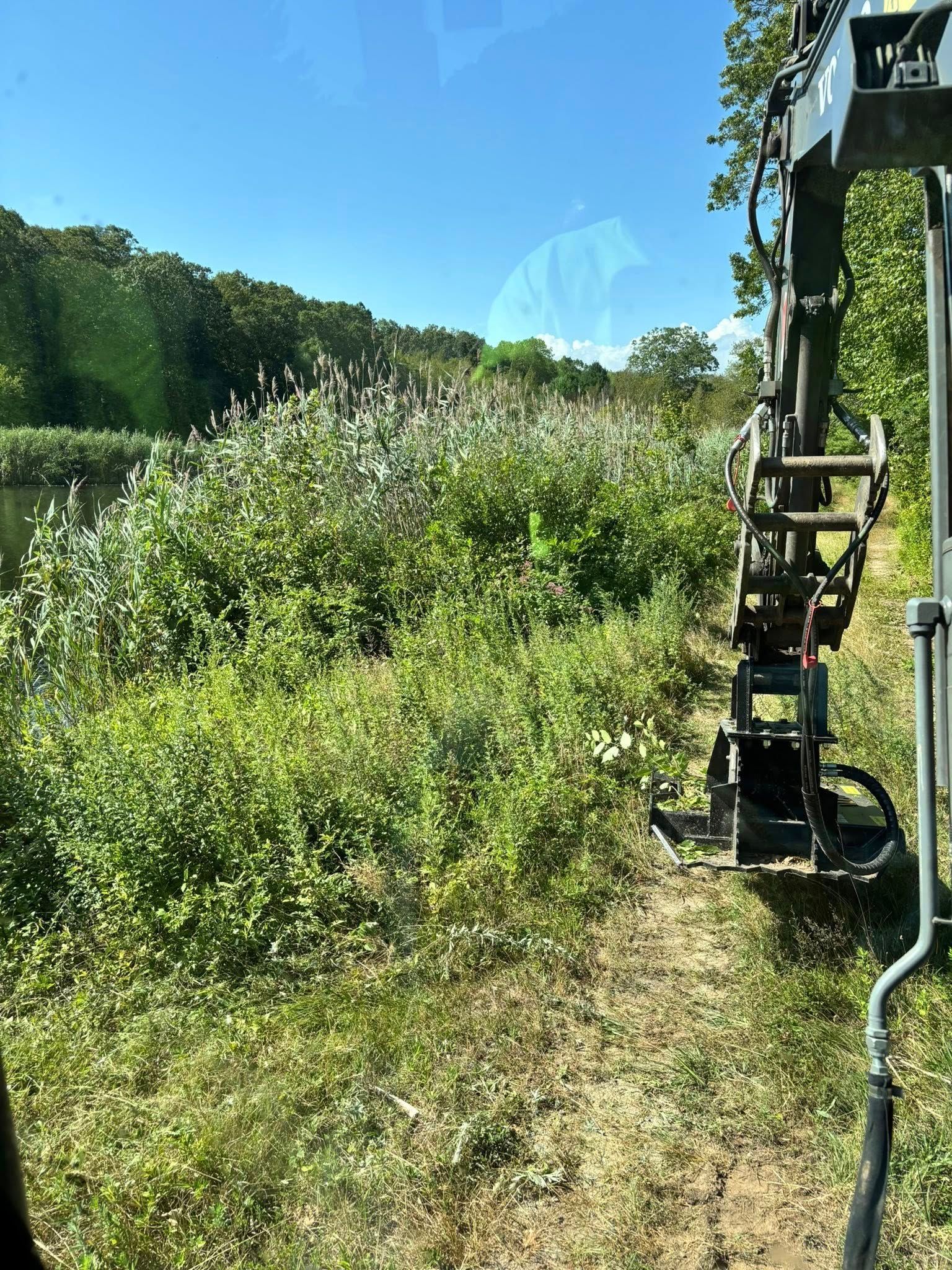
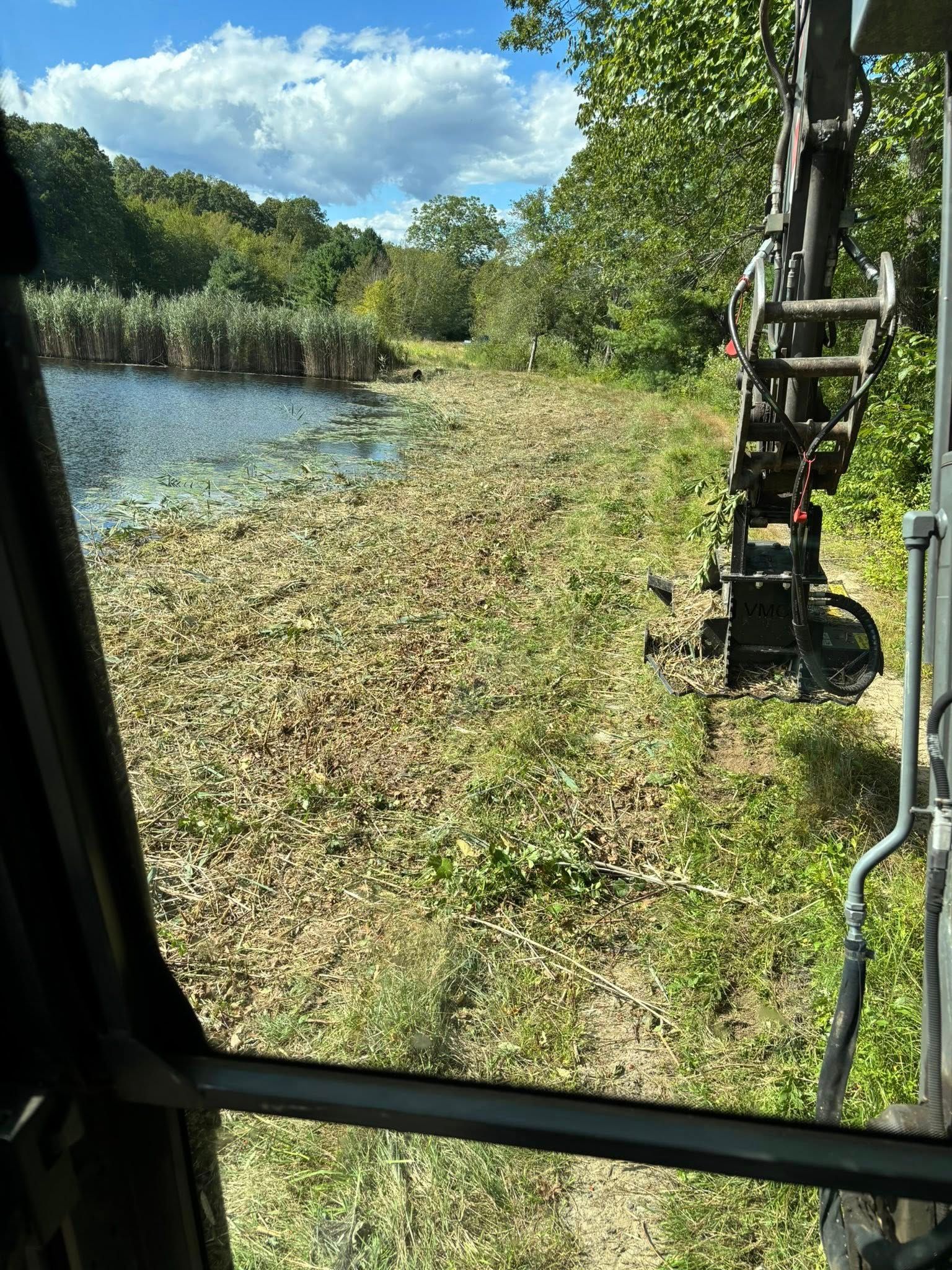
Hydraulic rotary cutters mount on a tractor or skid steer and extend a rotating blade on a hydraulic arm. The machine stays on stable ground while the arm reaches into ditches, hillsides, and wet margins. On a rocky Moodus slope, this keeps heavy equipment off unstable terrain and reduces the risk of blade contact with ledge. The tradeoff: less effective on dense multi-stem thickets where shredding material in place is preferred.
Flail mowers use spinning flails to shred brush and return it to the ground as mulch — no haul-away needed for most material. They cover large areas quickly and handle mixed sapling and brush density well on moderate terrain. A forestry mulcher is the heavy-duty variant, capable of grinding small trees into ground mulch. These tools are less precise on steep or very rocky ground, so terrain assessment comes first.
A quick decision guide: steep slope or bank calls for a hydraulic rotary cutter; dense sapling thickets on moderate ground call for a flail mower or forestry mulcher; mixed invasive vines plus saplings typically require a combination of both approaches; tight access near fence lines or ditches favors the hydraulic boom cutter.
Clearing Invasive Vines vs. Sapling Thickets
Invasive vines and pioneer saplings respond differently to cutting — treating them the same way leads to faster, denser regrowth.
Oriental bittersweet, multiflora rose, and wild grape all resprout aggressively from root crowns after mechanical cutting. Running a flail mower over a bittersweet tangle shreds the above-ground growth but can stimulate dozens of new shoots from the undisturbed root system. Effective vine removal means cutting at the base, not just mowing over the canopy. Bittersweet that has climbed into the tree canopy must also have the top growth removed — leaving it in place continues to kill host trees even after the base is cut.
Timing matters here. Late fall and late winter are the best windows for invasive vine work: root energy is at its lowest before and during dormancy, the vine structure is fully visible without leaf cover, and resprouting pressure is reduced going into the cleared season.
Fast-growing pioneer species — gray birch, quaking aspen, box elder, staghorn sumac — respond to cutting by coppicing hard from the stump. A forestry mulcher or flail mower that cuts close to grade reduces the energy available for resprouting, but stumps from saplings four inches in diameter or larger often need follow-up grinding to stop the cycle. That is the natural connection between land clearing and stump removal after clearing.
Does Seasonal Timing Affect Brush Clearing Results in the Connecticut River Valley?
Yes — late fall and late winter are the most effective clearing windows for Connecticut River Valley lots, combining low invasive root energy with workable ground conditions.
Late fall (November into early December) offers dropped leaves for full visibility, ground that is still firm enough for equipment access, and invasive root systems at their lowest energy point before winter dormancy. Late winter (February into mid-March) brings a different advantage: frozen ground lets tracked equipment access soft, low-lying areas without rutting the soil — a practical benefit on Moodus lots with wet margins.
The Connecticut River Valley's microclimate runs slightly milder than interior Connecticut, which means late-winter work windows here often stay open when inland towns are still frozen solid. That local timing advantage is worth factoring into project planning.
The windows to avoid are April through June, when growth is at peak energy and clearing can stimulate aggressive resprouting, and late summer, when dense foliage hides the full extent of the problem and heat stresses both equipment and operators.
What Does a Professional Clearing Job Include Start to Finish?
A complete clearing engagement covers site assessment, equipment selection, the clearing pass, debris handling, edge cleanup, and a post-clearing review that identifies any stumps needing removal.
Before any cutting starts, a site walk identifies terrain challenges, invasive species present, property access points, and any areas that need special handling — ledge zones, wet margins, structures nearby. Equipment is then selected based on what the site actually requires, not what the contractor happened to bring.
The clearing pass itself varies by method: flail and forestry mulcher work mulches material in place, while some situations call for piling material for chipping or hauling off larger debris. Edge cleanup along fence lines, tree drip lines, and near structures comes after the main pass. A post-clearing walk identifies stumps of saplings large enough to resprout and flags areas that may need a follow-up treatment pass the following season.
When stump grinding is part of the same mobilization, it is more cost-efficient than scheduling it as a separate return visit — fully cleared land allows mowing, landscaping, or building where root systems once blocked progress.
Matching equipment to terrain type and growth type — not defaulting to whatever machine is available — is what separates a cleared lot that stays clear from one that returns to thicket within two seasons.
Schedule a site assessment with S.F. Property Services LLC to determine which clearing method fits your Moodus lot and get a clear picture of what the work will involve.